
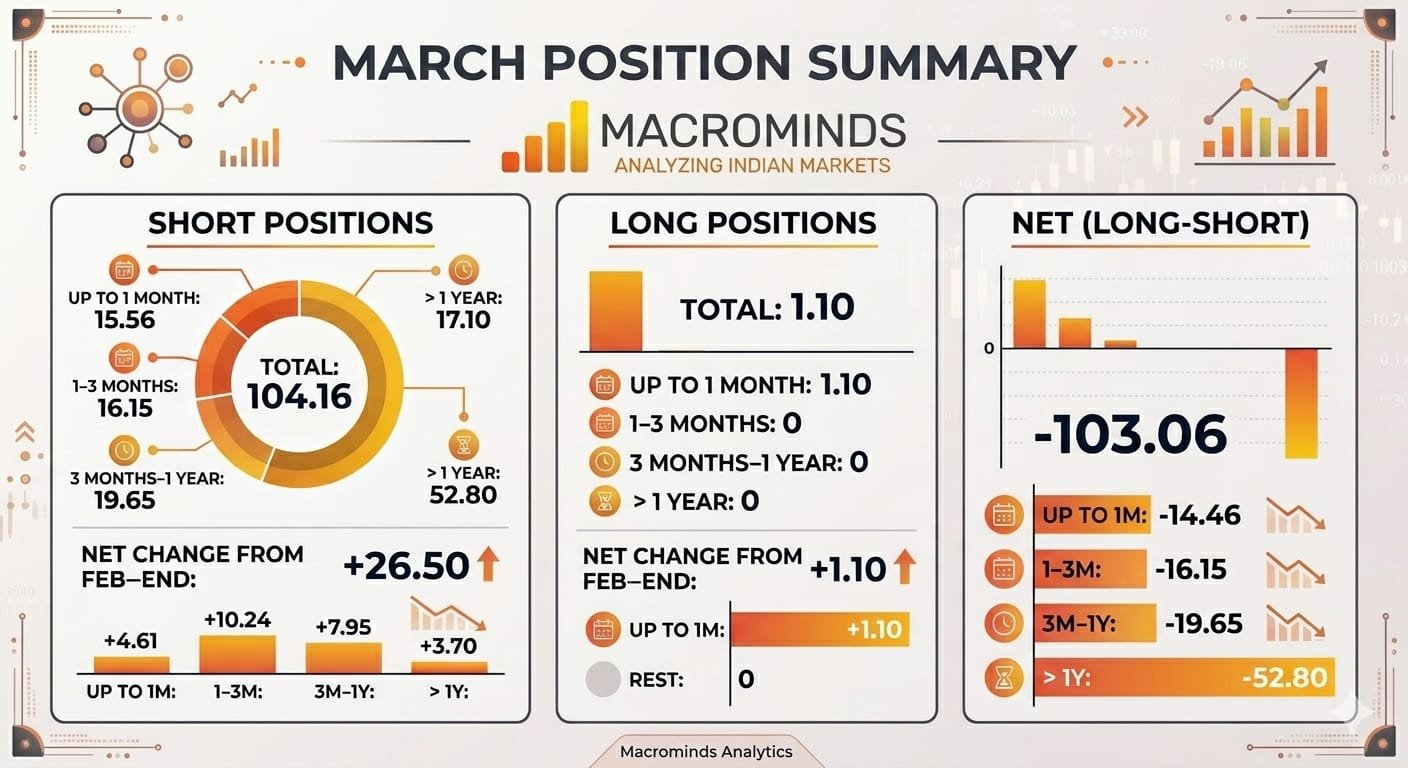
RBI’s short forward book crossing the $103 billion mark is a big number, but the real story is in why it has grown so fast. The answer is straightforward: the rupee has been under pressure from multiple directions—oil‑shock risk linked to the Iran conflict, persistent FPI outflows, and a weaker external‑balance outlook. This is not a one‑off shock; it is a sustained drag on the currency.
The market is not viewing this as a routine intervention cycle. It looks more like RBI has been forced to lean heavily on forwards to slow the pace of depreciation while trying to avoid repeated spot sales that rapidly erode headline reserves. That can work for a while, but the larger the forward short book becomes, the more the market starts to question how sustainable this stance really is.
Why RBI is using forwards
The logic is simple: when the rupee weakens, RBI can sell dollars in the spot market, but repeated spot operations directly reduce disclosed reserves and can send an uncomfortable signal. Forward intervention gives the central bank another lever—it provides near‑term FX support without the same immediate reserve depletion seen in spot sales. That is why central banks often rely on forwards and swaps when their goal is to smooth volatility rather than defend a fixed exchange rate.
Beyond this general reason, there is another important dynamic at play. The scale of RBI’s forward‑dollar selling appears to be significantly larger than what would be justified by the expected current‑account deficit for the year. Even at a crude price of around $100, many estimates suggest the external deficit can be capped at roughly $80 billion. Yet RBI’s actions suggest dollar demand is running well beyond that figure.
This points to heavy buying from importers—hedging higher oil and energy bills—as well as sizable speculative positioning in forwards. To counter this one‑way flow, RBI is effectively taking the other side of the market. Whether that timing turns out to be right or not, only time will tell. But the market is watching closely, because that kind of positioning concentrates risk in the central bank’s books.
Market impact
A large short forward book affects the market in several ways. First, it can support the rupee in the near term because it signals strong official dollar supply, which tends to discourage aggressive shorting. Second, it can flatten or distort forward points and short‑end pricing. When participants expect RBI to keep stepping in, they start discounting that intervention, and pricing can become less “clean” and more regime‑driven.
Third, it creates concerns about future rollover pressure. If the book keeps growing, the market will increasingly focus on reserve adequacy, rollover risk, and whether RBI’s actions are delaying the move rather than changing the underlying FX trend. For the time being, the data reflect March numbers and the market was already pricing in the broad range of these flows, so there is no immediate shock. But the questions will only get sharper as the book expands.
Conclusion
The takeaway for traders and investors is clear: RBI’s $100 billion‑plus forward short position is not just a technicality; it is a signal of how hard the central bank is working to manage rupee pressure in a tough external environment. The scale of selling relative to the expected BoP deficit suggests that a lot of the demand is not just fundamental trade‑related hedging, but also speculative and front‑running flows.
In this setup, RBI is effectively absorbing the brunt of the market’s dollar buying, but every dollar sold in forwards is a future liability that will have to be rolled, unwound, or settled. The market will now be watching whether the external backdrop improves, or whether RBI’s forward book becomes the main source of FX risk itself. The rupee’s path from here will depend less on pure fundamentals and more on the central bank’s patience, timing, and its ability to manage expectations as the book grows.
Leave a Reply